
Rhodes Road Trip Itinerary: Ultimate 7-Day Travel Guide
Planning a Rhodes road trip? This detailed 7-day Rhodes itinerary shows you exactly how to explore one of Greece’s most beautiful islands by car. From the UNESCO-listed Old Town of Rhodes to the whitewashed village of Lindos, crystal-clear bays, mountain villages and hidden beaches, this guide includes everything you need to plan the perfect one-week adventure.

By Dirk Pohlers, Greece traveller from Germany. I visit every place I write about & share real tips, photos, & advice from my trips in my Rhodes Travel Blog.
Based on my own experience travelling around Rhodes twice, this itinerary combines famous landmarks with lesser-known spots, practical driving advice, accommodation recommendations and local tips to help you make the most of your trip.
Table of Contents
Why Choose a Road Trip Around Rhodes?
Rhodes is the largest island in Greece’s Dodecanese archipelago and one of the easiest Greek islands to explore by car. Thanks to its compact size, excellent road network and incredible diversity, you can drive from medieval castles to secluded beaches, mountain villages and pine forests in less than two hours.
With more than 300 days of sunshine every year, Rhodes is an ideal destination from May to October. Whether you’re travelling as a couple, with friends or as a family, a rental car gives you the freedom to discover places that organised tours often miss.
- During the off-season (May–June, September–October), temperatures range from 20–25 °C, and the major attractions are noticeably less crowded.
- Book ferry tickets to Symi and accommodations in Lindos well in advance during the peak season
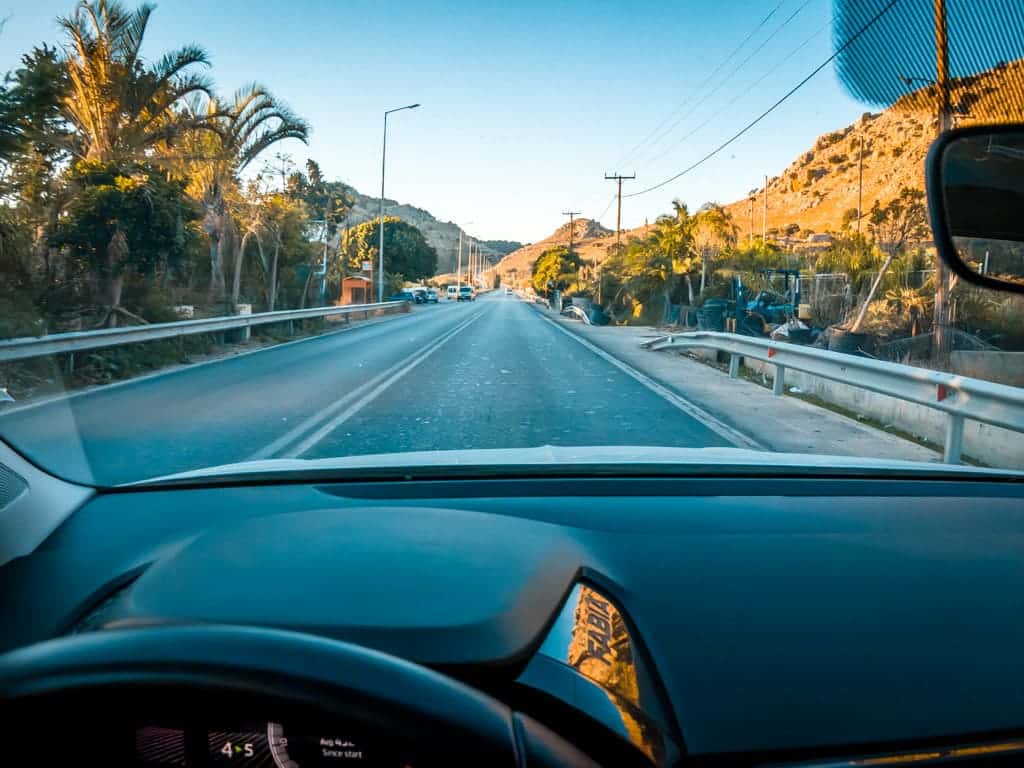
Unlike many larger Greek islands, driving in Rhodes is straightforward. Coastal roads are generally well maintained, distances are short, and every day offers a completely different landscape.
My Rhodes Road Trip at a Glance
- Duration: 7 Days
- Total Distance: Approximately 280 km
- Total Driving Time: Around 8 hours
- Best Time to Visit: May–October
- Starting Point: Rhodes Town
- Best For: Beaches, history, food lovers, couples and photographers
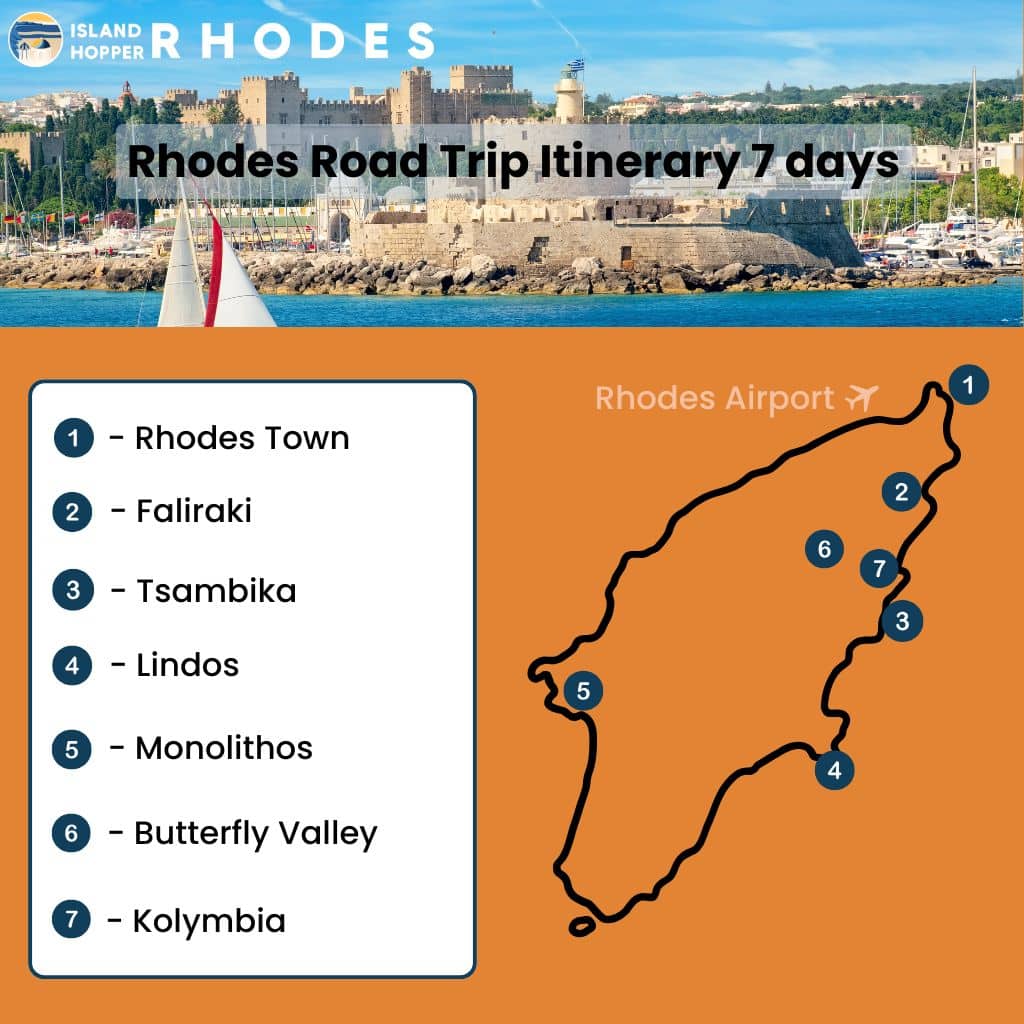
My Route
Day 1 – Rhodes Town
Day 2 – Kallithea Springs, Faliraki & Anthony Quinn Bay
Day 3 – Tsambika Beach & East Coast
Day 4 – Lindos
Day 5 – Monolithos, Fourni Beach & Embonas
Day 6 – Butterfly Valley & Psinthos Mountains
Day 7 – Kolymbia & Seven Springs
Why Explore Rhodes by Car?
Many of the island’s most beautiful beaches, scenic viewpoints and traditional villages aren’t well connected by public transport. With your own car, you can stop whenever you spot a hidden beach, enjoy sunset viewpoints without worrying about bus schedules and discover authentic tavernas tucked away in the mountains.
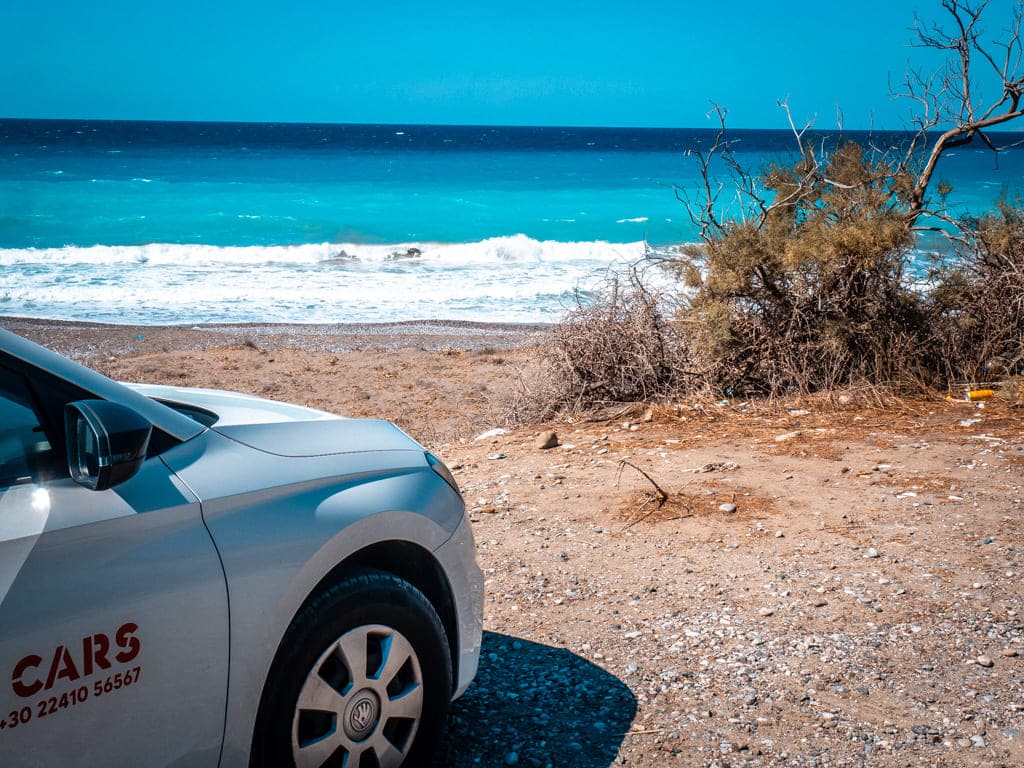
In my opinion, Rhodes is one of the best Greek islands for a road trip. Unlike larger islands where driving can take hours, Rhodes is compact and easy to explore. Most destinations are between 20 minutes and 1.5 hours apart. I also found the roads surprisingly good. Outside of Rhodes Town, traffic is light, signage is clear, and driving feels relaxed—even in the mountains.
Driving in Rhodes is surprisingly straightforward. Roads are generally well maintained, traffic outside Rhodes Town is light and most destinations are less than 90 minutes apart.
Advantages of Renting a Car
- Complete flexibility
- Access to hidden beaches
- Easier parking outside major towns
- Save time compared to buses
- Ideal for photographers and sunrise or sunset trips
Insider Tip: Book your Rhodes rental car several weeks before travelling during July and August, as prices increase significantly during peak season.
7-Day Rhodes Road Trip Itinerary
Day 1 – Discover Rhodes Town
There’s no better place to begin your Rhodes itinerary than the island’s fascinating capital.
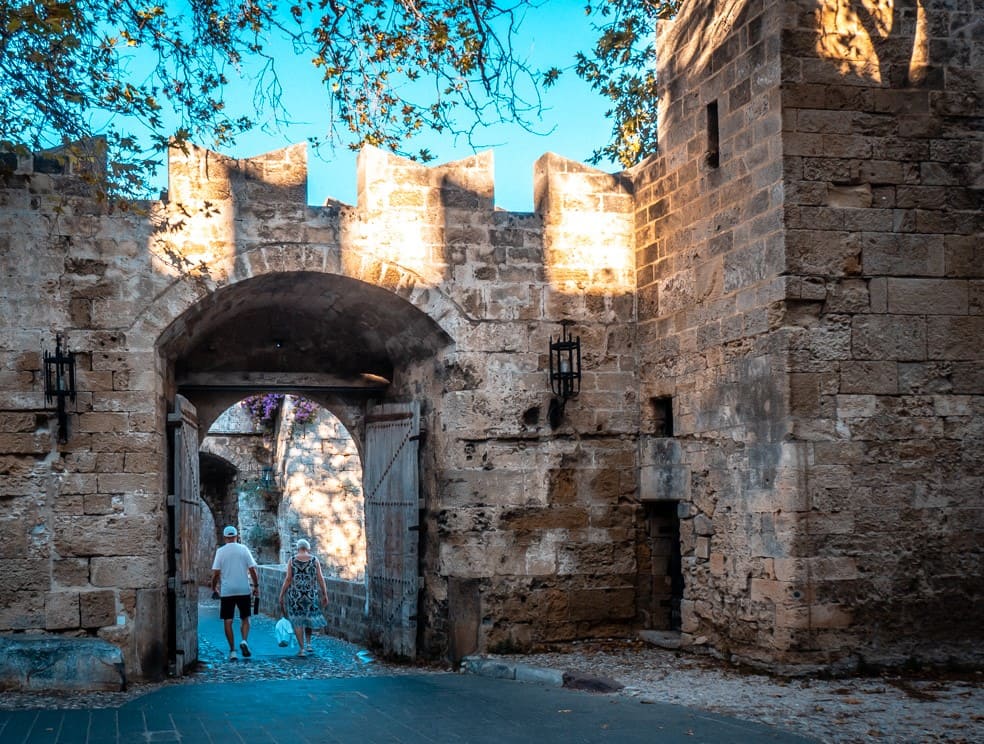
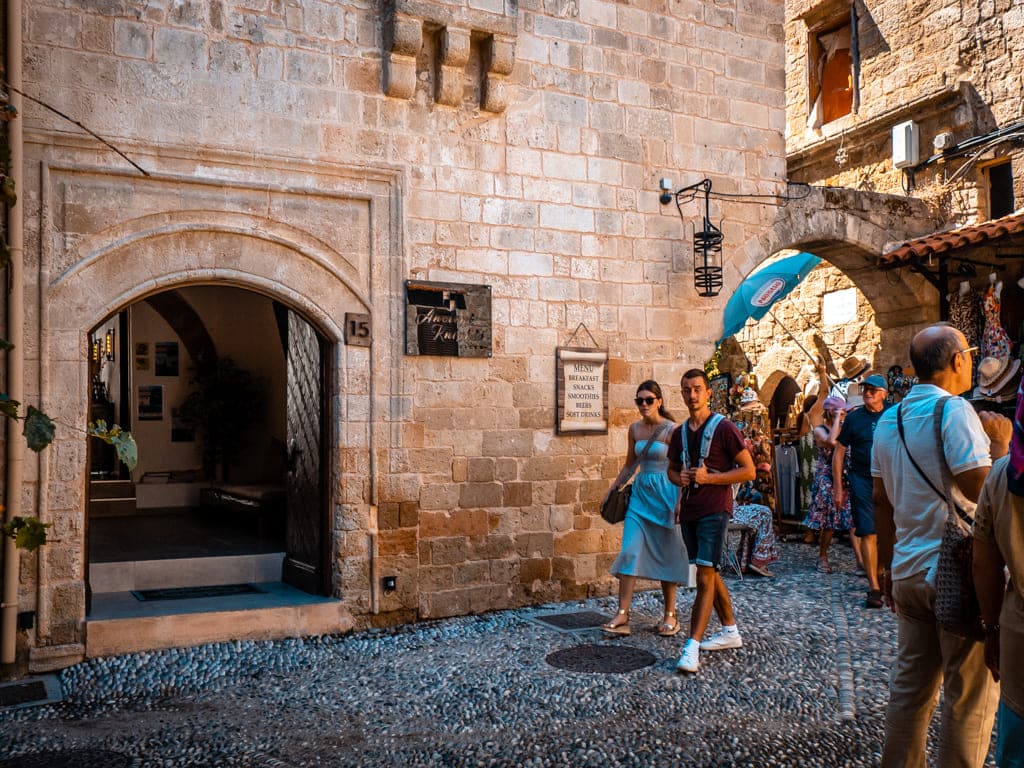
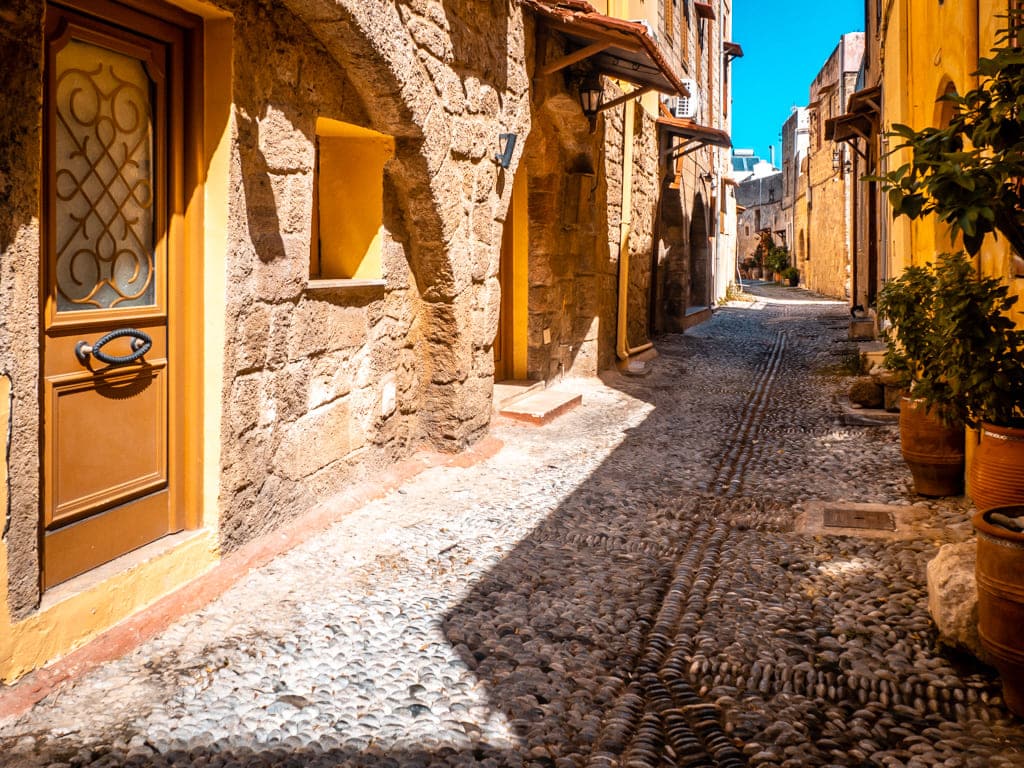
Rhodes Town perfectly combines medieval history with modern Greek culture. Walking through its cobbled streets feels like stepping back into the age of knights, while lively cafés, boutique shops and rooftop restaurants give the city a vibrant atmosphere.
The UNESCO-listed Old Town is one of the best-preserved medieval cities in Europe and deserves at least a full day of exploration.
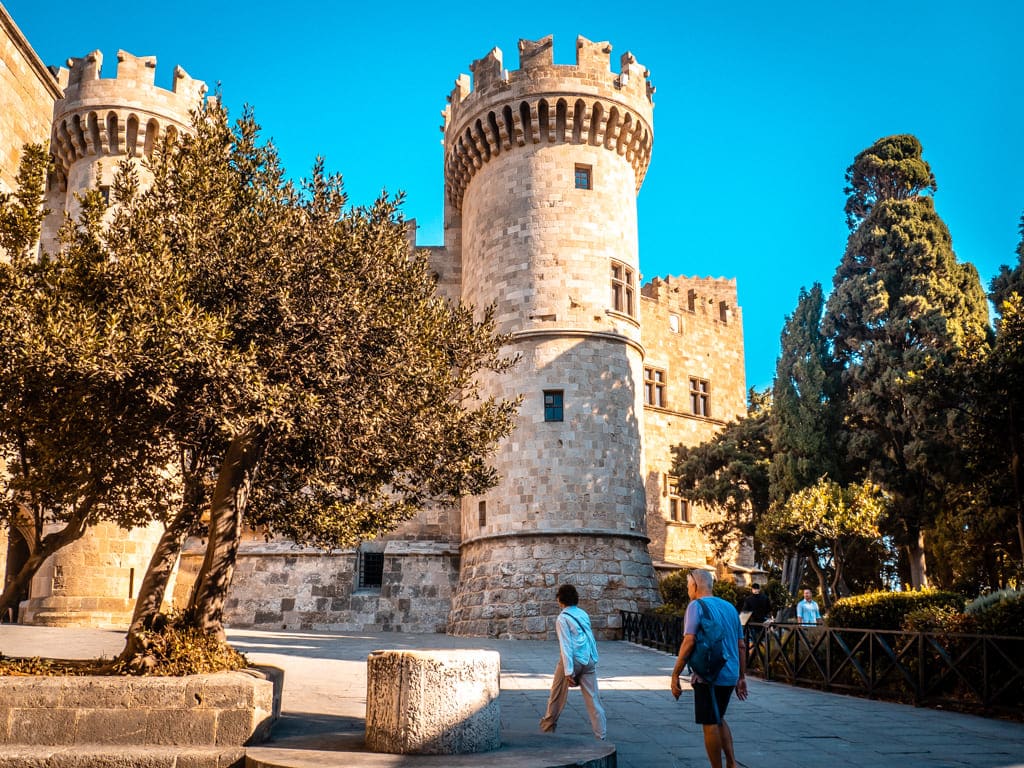
I started my morning at the impressive Palace of the Grand Master. Standing in front of its enormous stone walls, it’s hard not to imagine what life must have been like when the Knights of St. John ruled Rhodes.
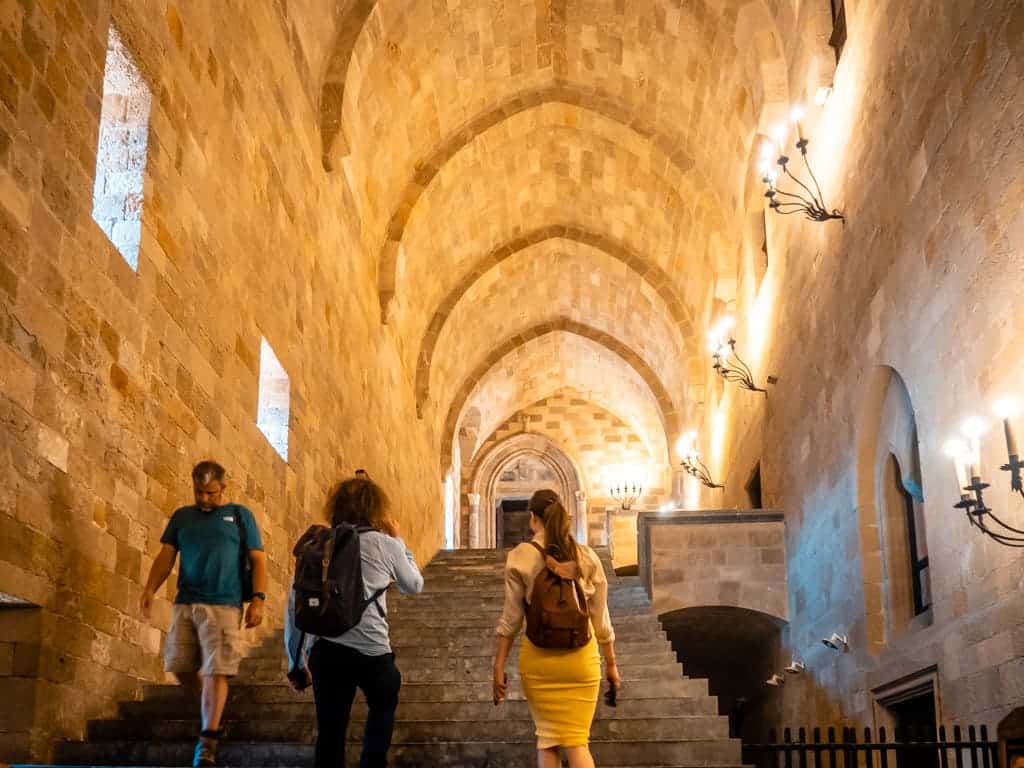
Inside, I spent well over an hour exploring the beautifully restored halls, courtyards and exhibitions. Even if you’re not usually interested in history, I think it’s worth visiting simply to appreciate the architecture.
What not to miss in Rhodes Town
- Palace of the Grand Master
- Street of the Knights
- Hippocrates Square
- Mandraki Harbour
- Medieval Walls
- Windmills of Mandraki
- Fort St. Nicholas
Also, don’t miss the famous deer statues at Mandraki Harbour, where legend says the Colossus of Rhodes once stood.
Insider Tip: Arrive before 9:00 am to enjoy the Old Town before cruise ship visitors arrive.
Where to Stay
I stayed at The Spanish Knights Inn, located inside the medieval walls. Staying within the Old Town allows you to experience Rhodes after the day-trippers leave, when the streets become wonderfully peaceful and atmospheric.

Day 2: Kallithea Springs, Faliraki & Anthony Quinn Bay
On my second day, I started driving south along the east coast.
Kallithea Springs
My first stop was Kallithea Springs, and I honestly didn’t expect to enjoy it as much as I did. It’s a restored spa complex with gardens, mosaics and a small bay with incredibly clear water. Even though I visited outside peak swimming season, it was still worth it just for the scenery.
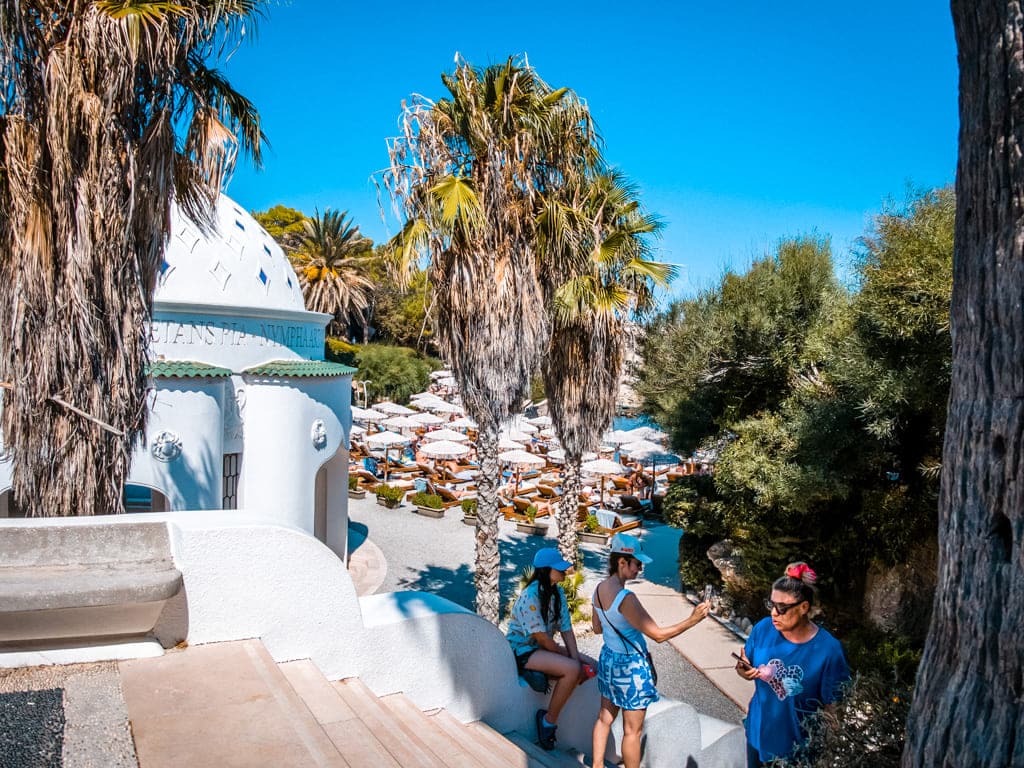
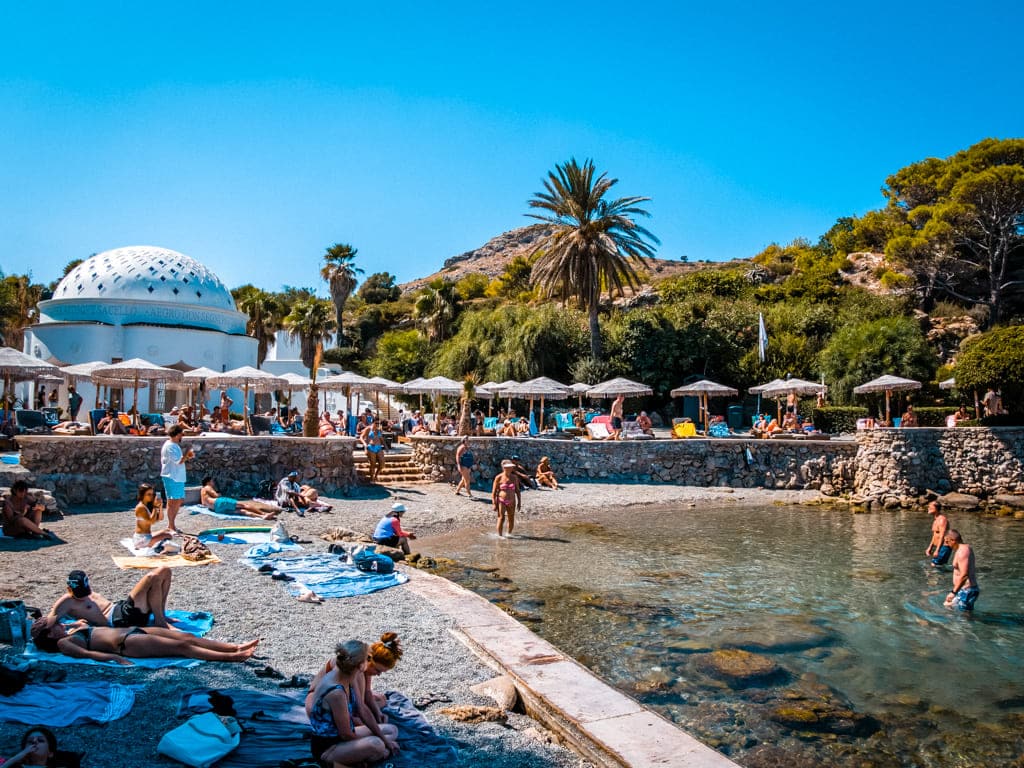
- Admission: Entry is €5, while a set of two sunbeds and an umbrella costs roughly €20.
- Swimming & Snorkeling: The emerald waters in the rocky cove are excellent for snorkeling. I highly recommend water shoes as the shore and seabed are very rocky.
- When to Visit: Avoid the peak crowds and the midday heat. It is best to arrive early in the morning around 9am.
Faliraki
Next, I stopped in Faliraki. It’s more developed and touristy than other parts of the island, but it has a long sandy beach and plenty of places to relax.
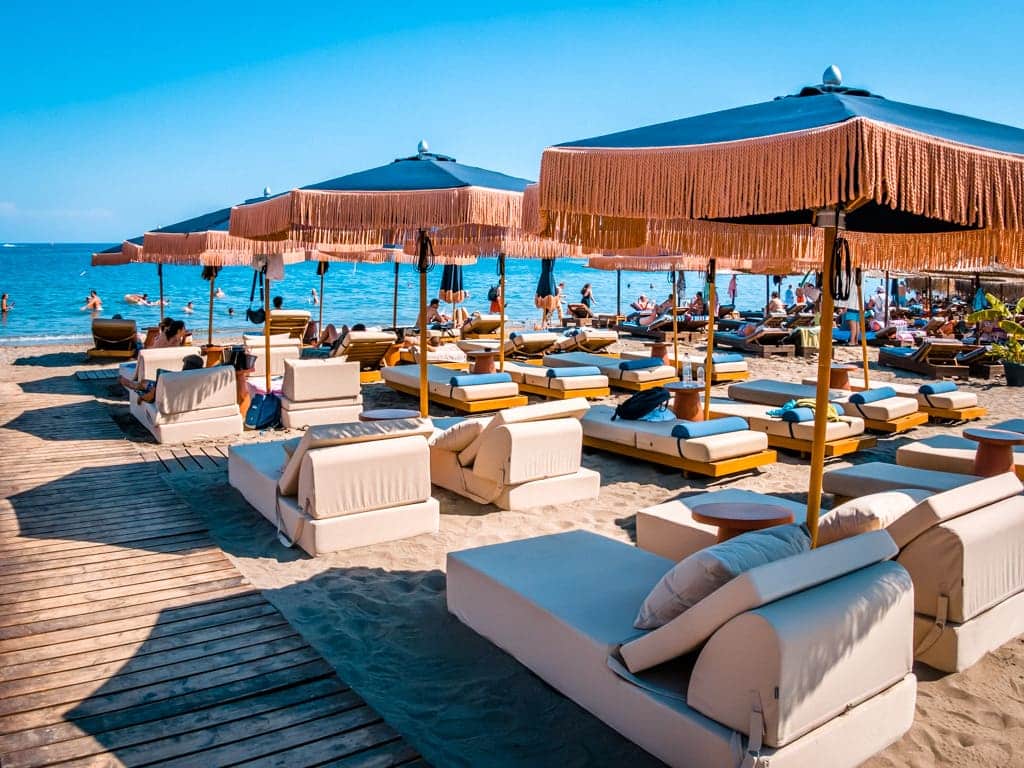
Get your tan game on as you bask in the warm sunshine. For activities, you can go jet skiing, kayaking, parasailing and my favorite recommendation, snorkeling. Water activities include catamaran rentals and windsurfing. And also horseback riding along the coast, paragliding, fishing, and mini cruises are possible.
I spent some time walking along the beach and grabbing a drink before continuing.
Anthony Quinn Bay
Anthony Quinn Bay was one of my favourite places in Rhodes. The water here is unbelievably clear, and the rocky landscape makes it perfect for snorkelling.
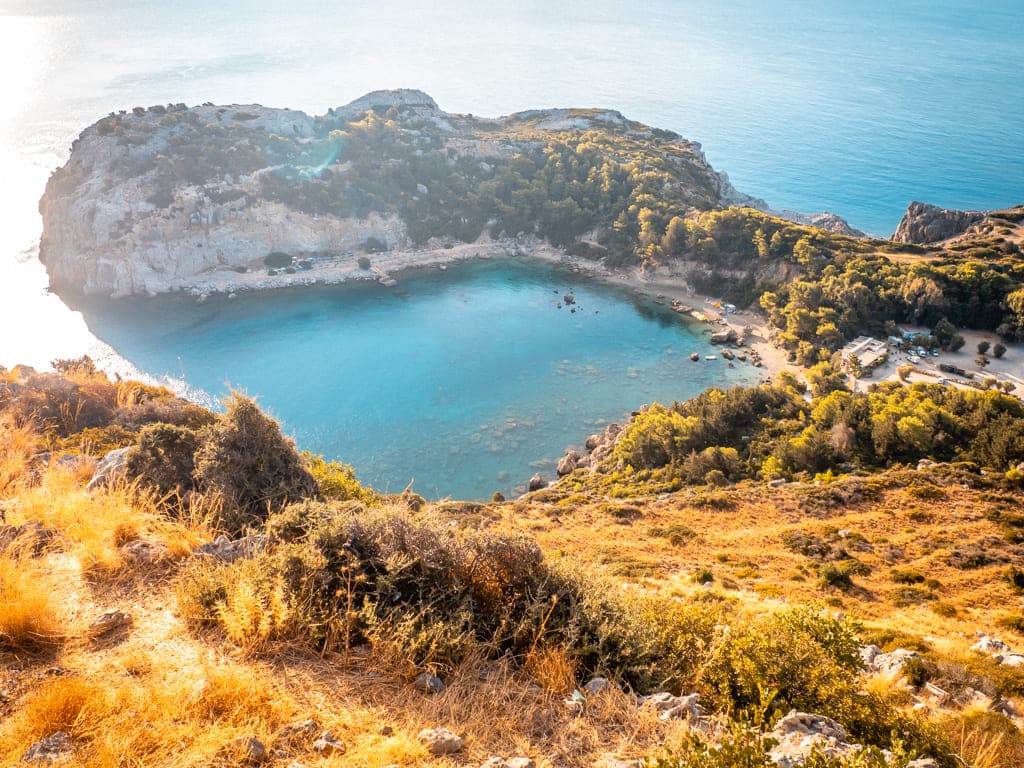
- When to to visit: Anthony Quinn Bay is heavily visited during peak season in July and August. I recommend the early morning before 9:30 a.m. to visit.
- Beach conditions: The cove is primarily rocky and pebbly with wooden platforms built into the rocks for sunbeds. Water shoes are highly recommended for walking on the rocks and in the water.
- Snorkeling: The bay is known for some of the best underwater visibility in Rhodes, so make sure to bring you snorkling gear!
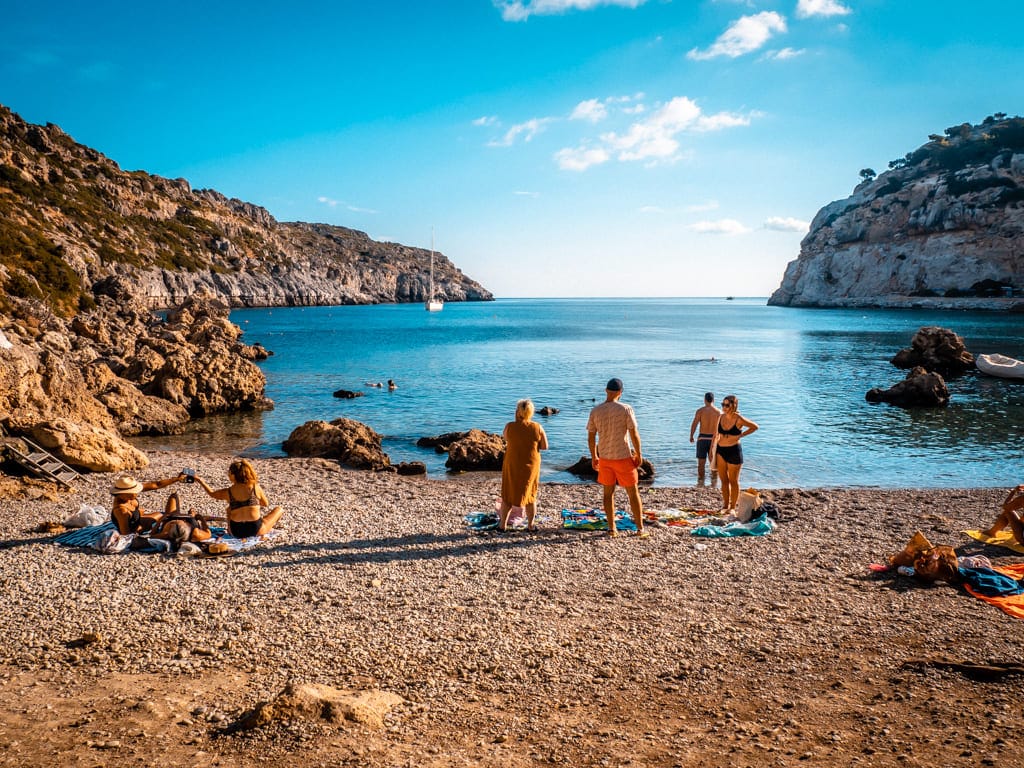
I spent a long time just swimming and exploring the coastline here—it’s easily one of the most beautiful bays on the island.
Day 3: Tsambika Beach & East Coast Relaxation
Day 3 was a slower, more relaxed beach day. I drove to Tsambika Beach, which has a long stretch of golden sand and shallow turquoise water. It’s one of the most comfortable beaches for swimming on the island.
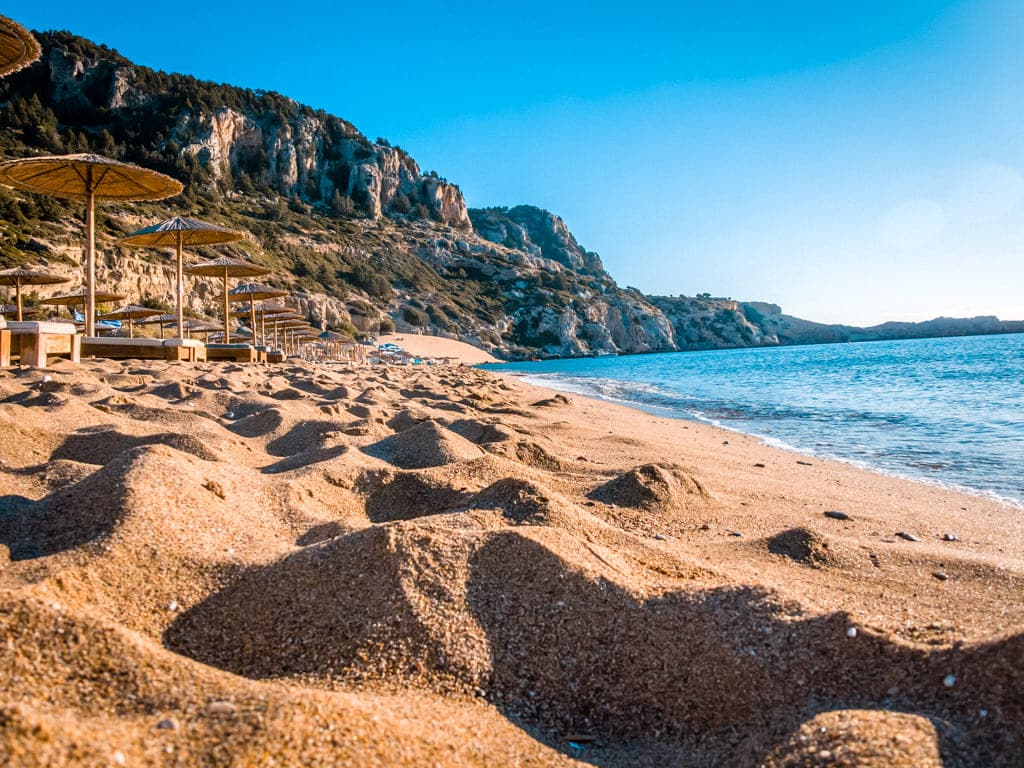
What I liked most was how spacious it felt. Even in peak season, it never felt too crowded. I spent most of the day here just swimming, reading and enjoying the sun.In the afternoon, I explored a few smaller beaches along the east coast before heading back.
Directly above the beach, the Tsambika Monastery sits perched on a rocky outcrop 300 meters above the sea, accessible via 297 steps. The view from the top is extraordinary, and the climb takes about 20 minutes.
Day 4: Lindos Village
Lindos was one of the highlights of my entire trip. The moment I arrived, I understood why it’s so famous. The whitewashed houses, narrow streets and hillside location make it feel almost unreal.
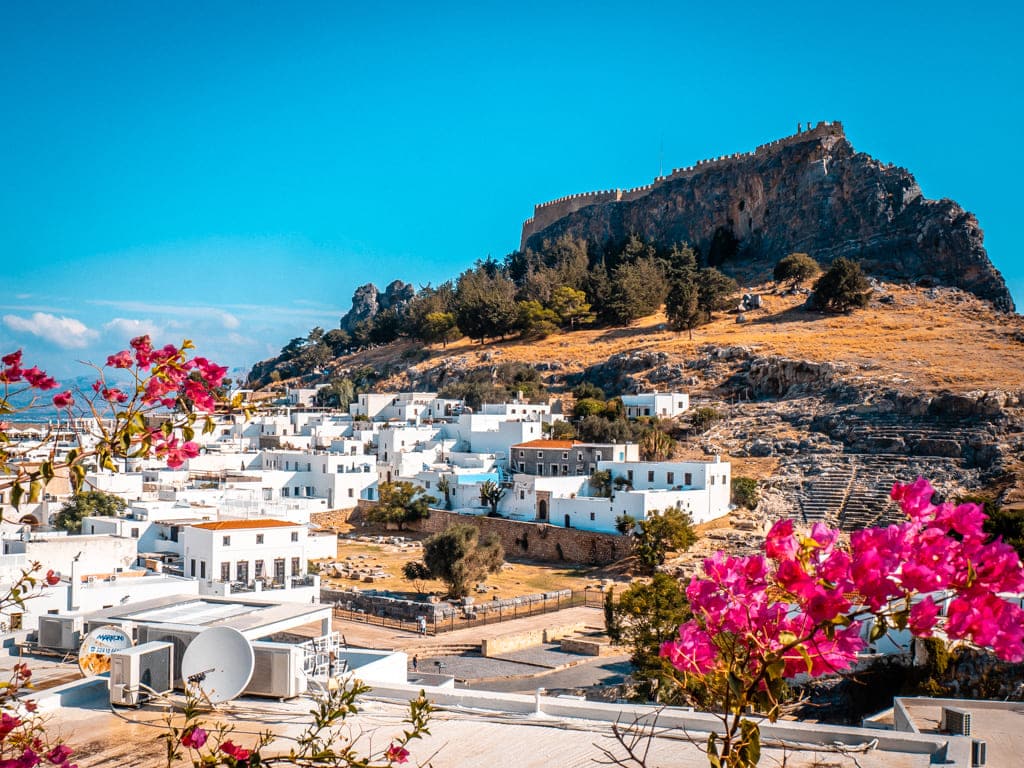
Lindos deserves a full day—not a rushed half-day visit. The Acropolis brings together ancient Greek columns, a Byzantine church, and fortifications built by the Knights of St. John in a compact area—on clear days, the view stretches far beyond the coastline.
Is the Acropolis of Lindos worth visiting, and how much time should you set aside?
Definitely—it’s one of the most rewarding sites on the island, but it does require some effort: The path up consists of steps and isn’t shaded, and in the afternoon heat, it’s really strenuous. Plan on 2–3 hours for the village, the climb, and the Acropolis itself. It’s best to go in the morning (the site usually opens around 8 a.m.), before the worst of the heat sets in and the tour buses arrive.
Lindos Acropolis
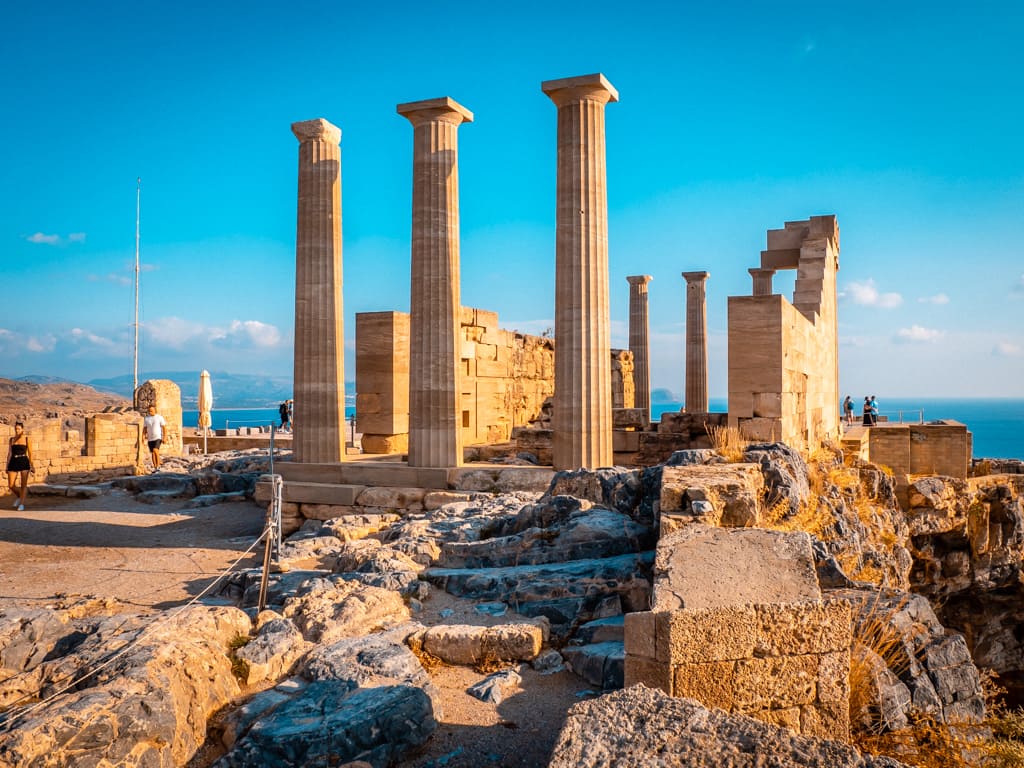
I started my visit by walking up to the Acropolis of Lindos, which offers incredible views over the bay. It’s a bit of a climb, but absolutely worth it. Afterwards, I explored the village itself, which is full of small shops, cafés and traditional houses.
Beach time at St. Paul’s Bay
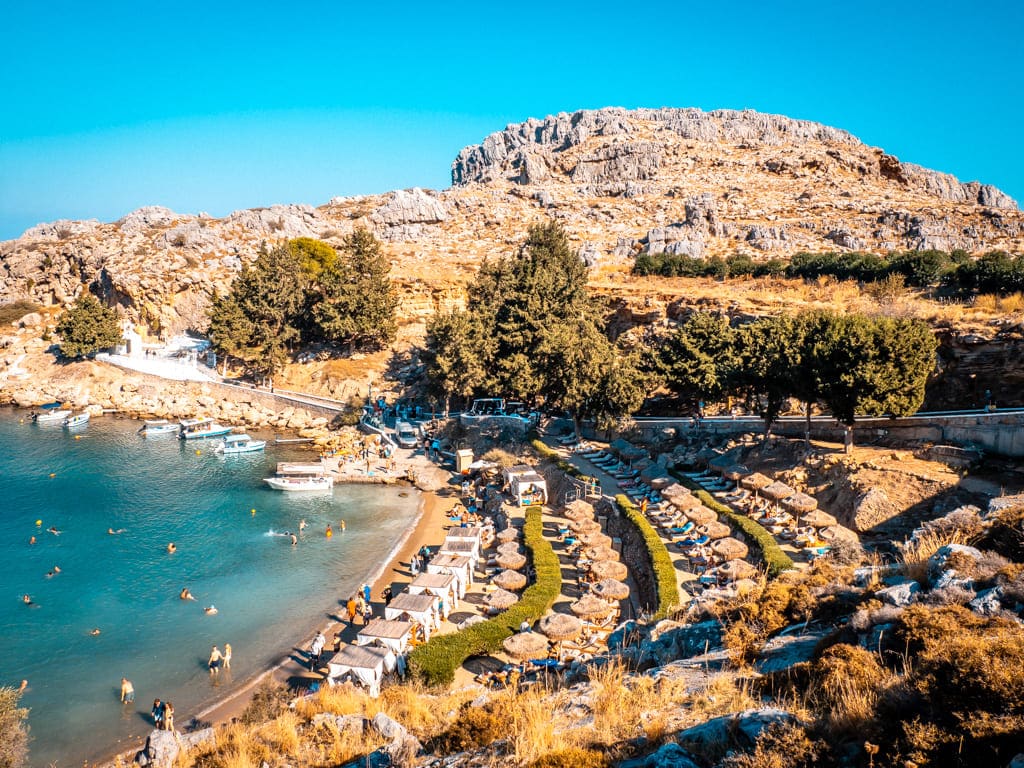
In the afternoon, I went down to Lindos Beach, which has calm, clear water perfect for swimming. From the Acropolis, the path leads down to Paul’s Bay, an almost circular, sheltered cove below the Acropolis cliffs, where, according to tradition, the Apostle Paul landed. The water is clear and calm—ideal for swimming. Lindos’s main beach, the large sandy cove north of the village, fills up by noon; if you want a good spot, you should be there before 11 a.m. The best way to spend the late afternoon is strolling through the white, cubist-style alleys of Lindos before heading back
My tip: Arrive early if you can. Lindos gets very busy by late morning, especially in summer.
Day 5: Monolithos, Fourni Beach & Embonas
Day 5 was the most scenic driving day of my trip.
Monolithos Castle
The drive to Monolithos was stunning. The castle sits on a rocky hill overlooking the sea, and the views from the top were some of the best I experienced on the island.
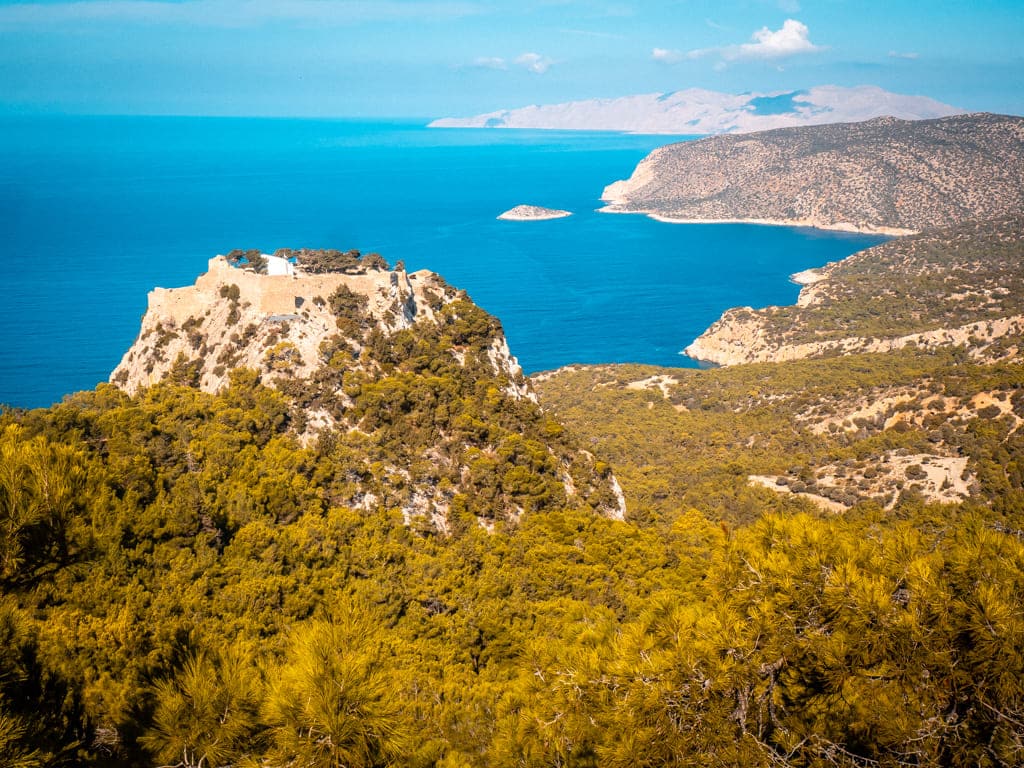
There is a short walk from the parking area, but it’s worth it for the panorama.
Fourni Beach
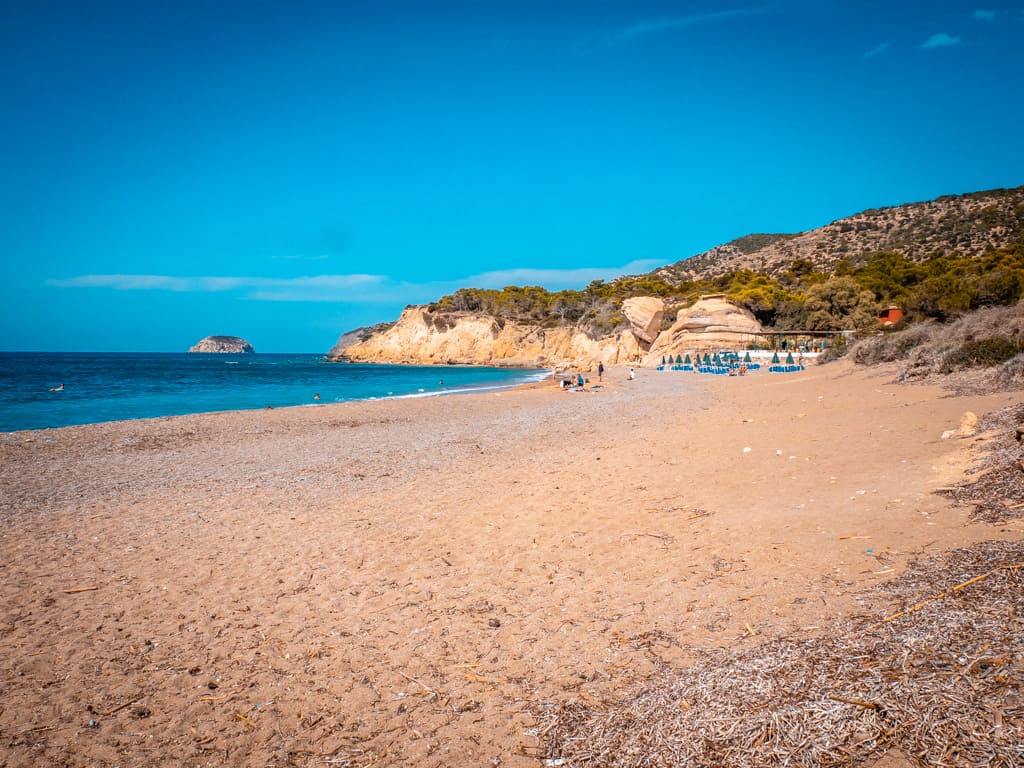
After the castle, I drove down to Fourni Beach. It’s quiet, less developed and much more peaceful than the east coast beaches.
Embonas
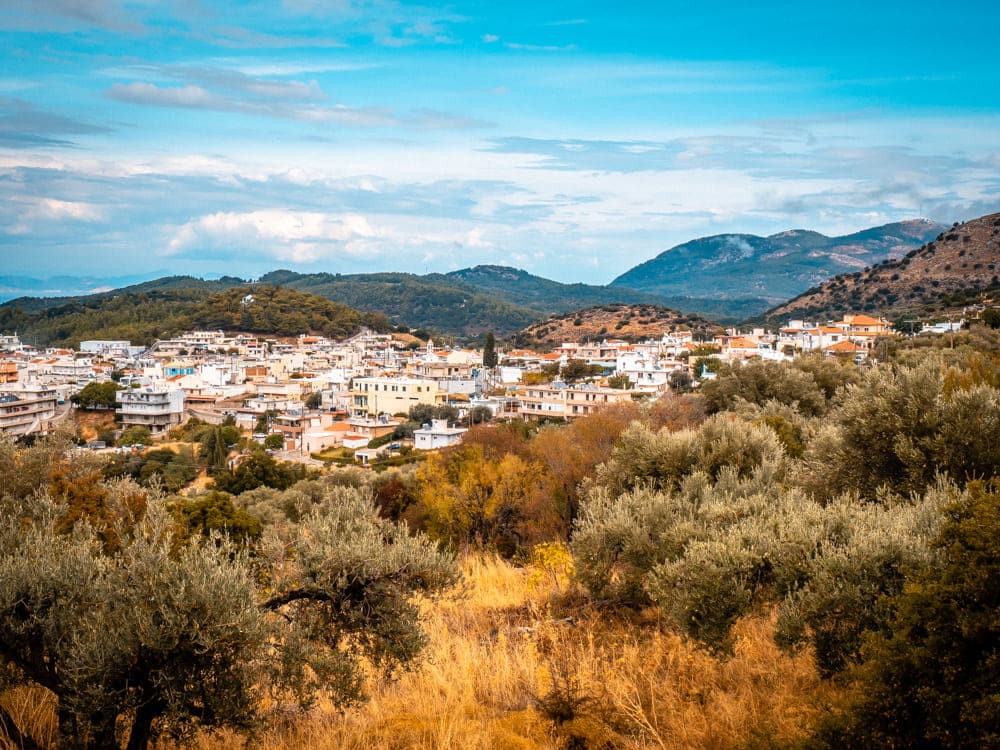
In the afternoon, I visited Embonas, a mountain village known for wine production. It was the perfect place to end the day with a relaxed dinner.
Day 6: Butterfly Valley & Psinthos Mountains
Day 6 took me inland. I visited the Valley of the Butterflies, which is especially popular in summer. The shaded paths, small waterfalls and forested scenery make it a peaceful change from the beaches.
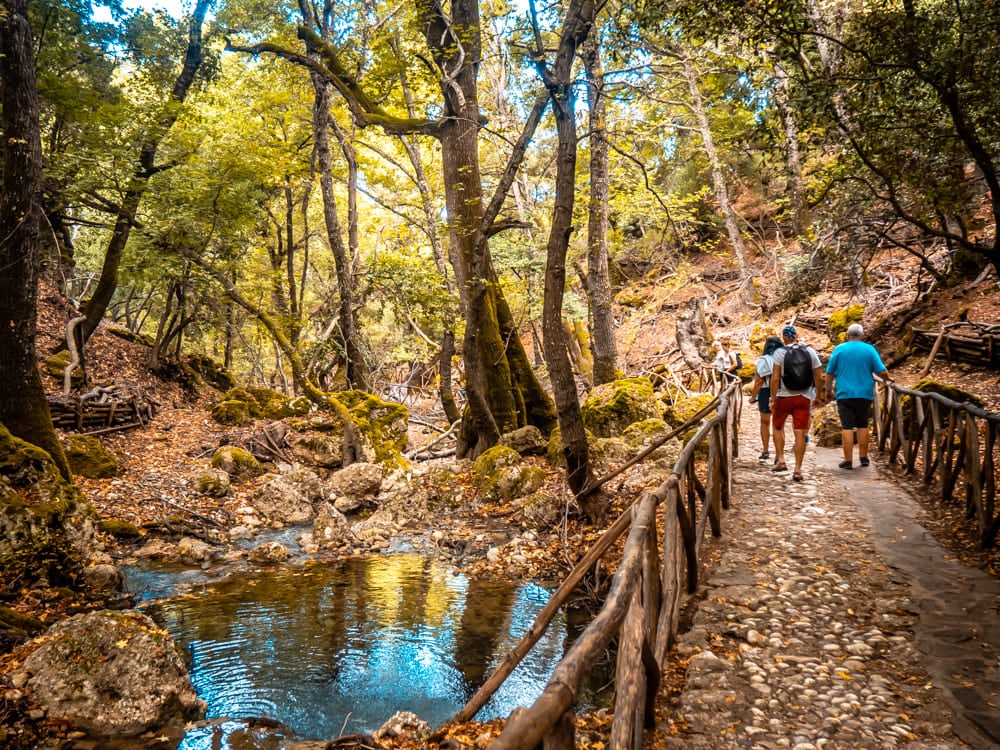
Walking through the valley felt completely different from the rest of the island—cooler, greener and quieter.
In the afternoon, I drove through the Psinthos Mountains, where I stopped in small villages along the way. This part of Rhodes feels much more traditional and untouched.
Day 7: Seven Springs & Kolymbia
On my final day, I kept things slow. I visited Seven Springs (Epta Piges), which is a green, shaded area with walking paths, small streams and a tunnel you can walk through if you’re feeling adventurous.
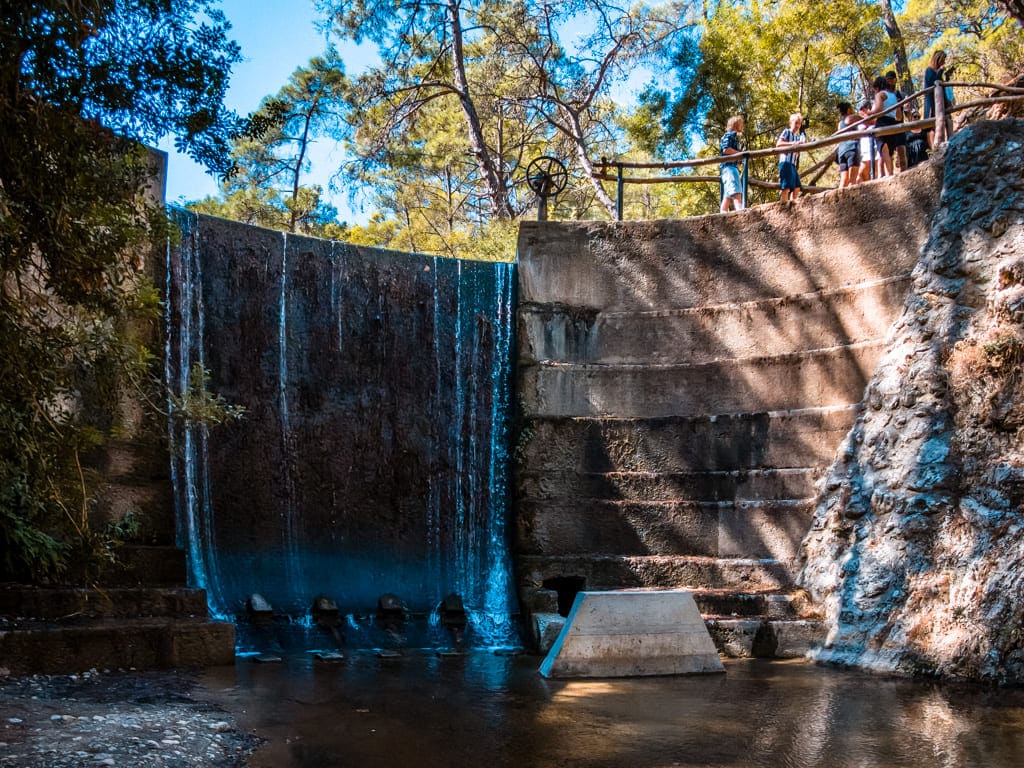
The East Coast Road south of Rhodes Town winds through some of the island’s most beautiful stretches of beach. First stop: Seven Springs (Epta Piges), about 30 km south of the city. The centerpiece is a 150-meter-long tunnel that winds through the rock to an artificial lake: narrow, dark, and passable only by wading through ankle- to knee-deep water. Some people love it; others find it claustrophobic and disappointing. Those who’d rather skip the tunnel can take the path around it. Admission is free.
It’s a nice contrast to the beaches and a peaceful way to end the trip. Afterwards, I spent some time in Kolymbia before heading back.
FAQ: Rhodes Road Trip Itinerary
Is 7 days enough for Rhodes?
Yes, 7 days is the perfect amount of time to explore Rhodes by car. It gives you enough time to see the main highlights like Rhodes Town, Lindos, Anthony Quinn Bay and Monolithos, while still having relaxed beach days. If you move too quickly, you’ll miss the slower charm of the island, which is part of what makes it special.
What is the best time to visit Rhodes?
The best time to visit Rhodes is between May and October.
- May–June: Fewer tourists, mild temperatures, great for sightseeing
- July–August: Hot and busy, perfect for beach days
- September: My personal favourite—warm sea, fewer crowds
- October: Still pleasant, but quieter and more relaxed
Which side of Rhodes has the better beaches?
The east coast has the most popular beaches, including Faliraki, Tsambika and Anthony Quinn Bay. The water is usually calmer and clearer here. The west coast is more rugged, windier and less developed, making it ideal if you’re looking for quieter, more natural scenery.
Is Rhodes expensive?
Rhodes can suit different budgets. Accommodation and food are generally more affordable than many other Mediterranean destinations. Costs increase in peak season (July–August), but you can still find good value hotels, especially if you book early.
Can I combine Rhodes with other Greek islands?
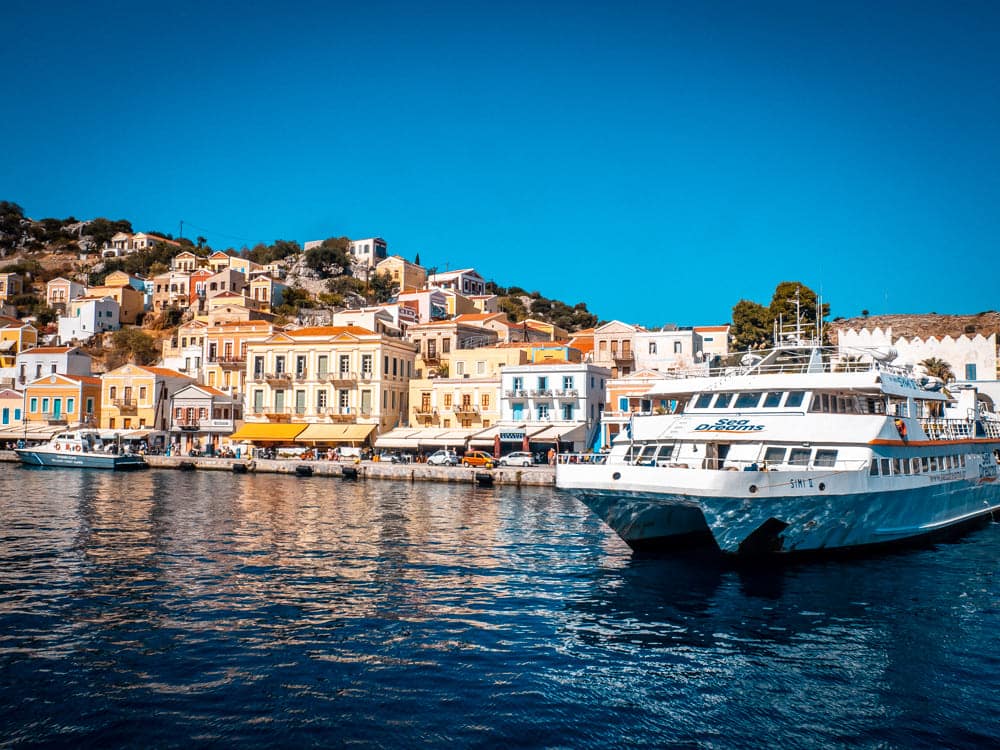
Yes, Rhodes is well connected by ferry to nearby islands such as Symi, Kos and Tilos. Many travellers also include island-hopping in their itinerary, especially if staying for more than a week.
Final Thoughts on My Rhodes Road Trip
After visiting Rhodes twice, I still think it’s one of the most rewarding Greek islands to explore by car. What I loved most was the variety. In one week, I experienced medieval cities, mountain villages, hidden beaches and some of the clearest water I’ve seen in Europe.
If I were to do this trip again, I wouldn’t change much—just slow down a bit more and spend extra time at the beaches I loved most, especially Anthony Quinn Bay and Tsambika. Rhodes is the kind of island that stays with you long after you leave. If you’re planning your own road trip, I hope this 7-day itinerary helps you experience it in the best way possible.
Before You Go: Logistics That Will Shape Your Week
At just over 1,400 km², Rhodes is the largest island in the Dodecanese—so distances matter. Lindos is about 55 km south of Rhodes Town, roughly an hour’s drive away. Prasonisi, the southern tip of the island, is 90 km away and takes closer to 90 minutes to reach. These aren’t grueling journeys, but they’re enough to expose the idea of checking off the entire island in a single day as a mistake you’ll regret by the afternoon at the latest.
- Best Beaches: Tsambika for families and swimmers; Prasonisi for water sports; St. Paul’s Bay in Lindos for crystal-clear, calm waters; Elli Beach for its location and proximity to town.
- Best Days to Visit the Old Town: Days 1–2 are ideal; by Day 3, most visitors are ready to move on from the town. On weekday mornings, the major attractions are a bit less crowded than on weekends.
- What to book in advance: Ferry tickets to Symi in July–August (popular with day-trippers); accommodations in Lindos if you plan to stay overnight; there may be lines for the Grand Master’s Palace, but it’s rarely fully booked.
Rhodes International Diagoras Airport (RHO) is located 14 km southwest of the city center. The public bus takes about 25–30 minutes and costs around €2.50–3; a taxi costs €25–30 and gets you there in about 20 minutes. If you want to rent a car for the whole week, the most efficient option is to pick it up right upon arrival at the airport.
Recommended

Hi. I’m Dirk, adventure traveller, originally from Germany. In 2020, Island Hopper Greece, started as a Greece travel blog. In 2022, I founded a small travel agency in the Balkans to complement my recommendations with some of the best experiences that I found, organized by local partners and friends.
 English
  Français
  Español
  Italiano
  Polski
  Svenska
  עִבְרִית